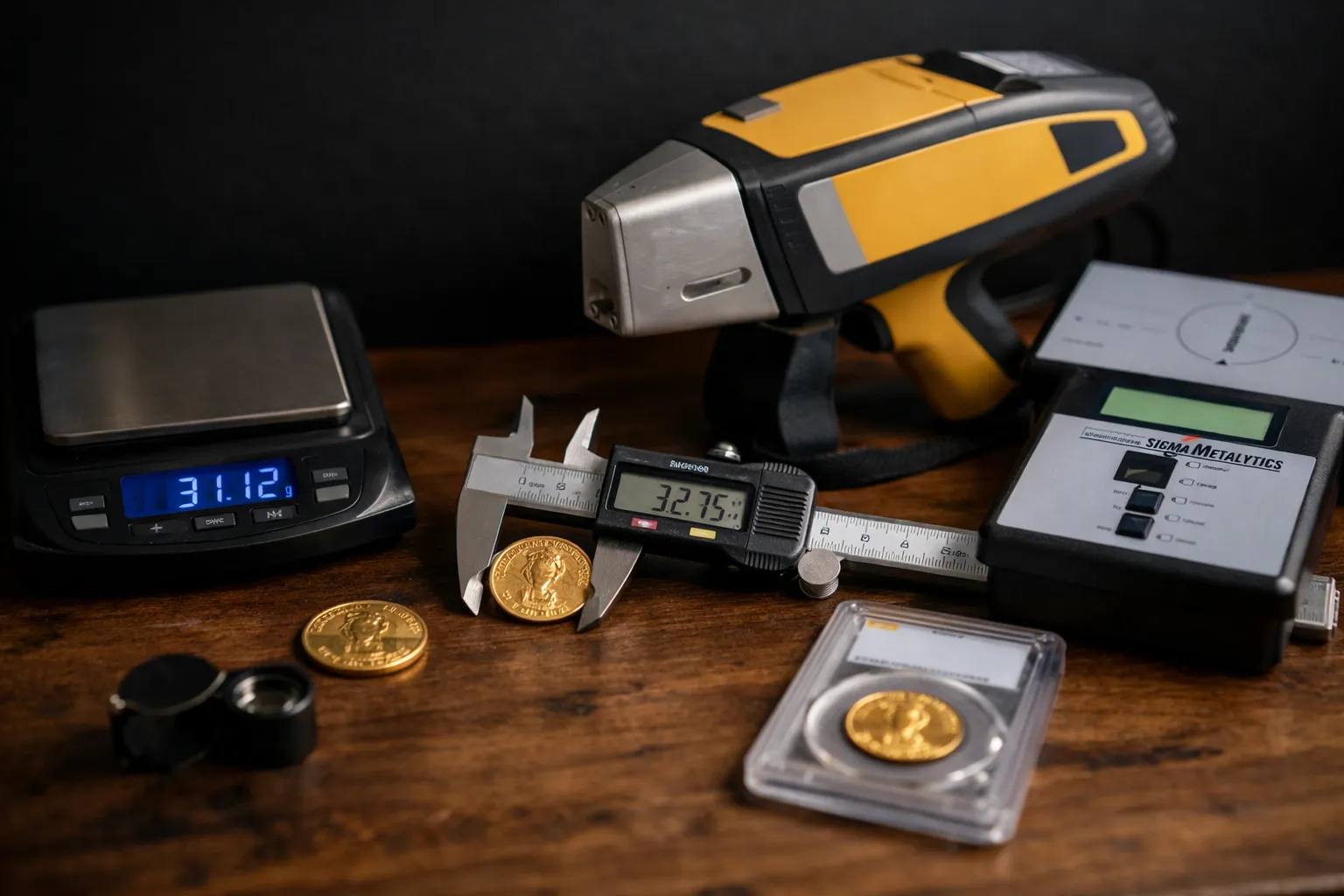
Buying high‑premium gold coins—proofs, limited mintages and graded specimens—can be a rewarding part of a bullion portfolio. But the same premiums that make these coins attractive also make them targeted by sophisticated counterfeiters. This guide walks a gold investor through a practical, step‑by‑step authentication workflow in 2026: what to check before you pay, which at‑home tests are reliable, when to call in a lab, how to use grading services and how to structure transactions to reduce fraud and loss.
Why a formal workflow matters in 2026
Counterfeiters have improved plating, tungsten cores and surface replication techniques. At the same time, retail access to professional testing tools (handheld XRF, conductivity testers) is more common, and several mints now embed micro‑engraving and digital provenance features. That mix means some simple tests that worked a few years ago aren’t definitive now; you need a layered approach that balances cost, convenience and risk.
Overview: the 10‑step field guide
- Pre‑purchase research: specifications and imagery
- Seller and channel vetting
- Request serials, provenance and high‑res photos
- Arrange in‑person inspection or live video verification
- Basic at‑home checks (weight, dimensions, magnet, sound)
- Specific‑gravity (hydrostatic) density test
- Non‑destructive instrumented tests (conductivity, XRF)
- When to send to a lab for advanced assay or grading
- Transaction mechanics: escrow, payment, insured shipping
- Post‑purchase steps: registration, storage and record keeping
1. Pre‑purchase: know the coin and its specs
Before any test, confirm the coin’s mint specifications: nominal weight (in troy ounces or grams), diameter, thickness, composition (pure gold or alloyed), and security features (micro‑engraving, radial lines, privy marks). Reliable sources are the issuing mint’s website and major coin catalogs. Note that 1 troy ounce = 31.1035 g and gold’s theoretical density is 19.32 g/cm³—useful values for density checks.
2. Vet the seller and the sales channel
Dealers, auction houses and established marketplaces have different risk profiles. Prefer:
- Reputable dealers with long track records, active memberships in industry associations and verifiable physical addresses.
- Auction houses with transparent provenance and buyer protections.
- Peer‑to‑peer platforms only with escrow and physical inspection options.
Red flags: sellers who push urgency, refuse questions, insist on exotic payment methods, or offer prices implausibly below market. Check trade reviews, ask for business registration and VAT/Tax IDs where relevant.
3. Ask for identifiers, photos and provenance
For graded coins, request the slab serial number (PCGS/NGC/etc.) and verify on the grader’s database. For ungraded high‑premium pieces, ask for high‑resolution (20MP+) photos of both sides, the edge, reeded detail and any micro‑engraving. If the coin has a mint certificate or prior auction lot number, note it—these improve traceability.
4. Insist on live inspection when possible
If buying remotely, ask for a live video call showing the coin on an accredited scale and caliper (see devices below), and a pan‑tilt of surface details at macro scale. A brief live session significantly reduces the risk of staged photos or stolen images.
5. At‑home basic checks (first line of defense)
These are inexpensive and fast. Use a 0.01 g precision scale and digital calipers.
- Weight: Compare to mint spec. Deviations should be within the mint’s tolerance—check the mint’s published figures rather than an arbitrary number.
- Dimensions: Diameter and thickness should match.
- Magnet test: Gold is non‑magnetic; any attraction suggests ferrous contamination or a magnetic core.
- Sound/test striking: A light “ping” can catch hollow or layered fakes; compare to a known genuine. This is subjective and alone not decisive.
6. Specific gravity (hydrostatic) density test
Density testing is low‑cost and effective against many fakes. Procedure:
- Weigh coin in air on a 0.01 g scale (Wair).
- Suspend coin in distilled water and weigh the submerged reading (Wwater).
- Calculate density ≈ Wair / (Wair − Wwater) × density of water.
This yields a practical density measurement. Simple setups identify cores of tungsten or other metals with differing density. Limitations: plated items with a genuine gold surface can still match the density if the core is tuned; use this alongside other tests.
7. Non‑destructive instrumented tests
These are the most practical next step before lab assays.
- Conductivity/Resistance testers (Sigma Metalytics): Measure electrical conductivity and thermal properties. These devices produce “signatures” for common bullion types; good for rapid screening. Units cost from a few hundred to a few thousand dollars; many dealers use them.
- Handheld XRF (Thermo Fisher Niton and similar): X‑ray fluorescence reads surface alloy composition and is widely used by dealers and pawnshops. Important caveat: XRF reads only the surface layer (≈microns). Sophisticated fakes with gold‑plated surfaces can pass XRF despite a non‑gold core.
Interpretation guidance: treat XRF and conductivity readings as complementary. If both match the mint’s expected composition, confidence rises—but if either result is inconsistent or ambiguous, escalate to a lab.
8. When to use a laboratory or grading service
Escalate testing based on value and risk profile. Typical triggers:
- Single coin value > US$5,000–10,000 (consider grading or full assay).
- Historical or rare pieces where provenance and certification materially affect value.
- Non‑consensus results from at‑home and instrumented tests.
Options:
- Third‑party grading (PCGS, NGC): Provides authentication, grading and tamper‑resistant slabs. Turnaround times and fees depend on service level; expect US$20–100+ per coin plus shipping and insurance.
- Independent assay labs (SGS, Bureau Veritas, university or national assay office): Can perform destructive fire assays or non‑destructive ultrasonic/CT scans that reveal internal cores. Costs vary widely—basic non‑destructive assays may be a few hundred dollars, full fire assay more.
For very high‑value coins, insist on a lab capable of cross‑sectional analysis or CT scanning to detect plated shells and cores.
9. Transaction mechanics: escrow, payment and shipping
Structure the deal to reduce counterparty and shipping risk:
- Use an independent escrow service for online purchases. Do not release payment until the coin is in the buyer’s possession and authenticated (or slabbed/assayed where agreed).
- Avoid wire transfers to private accounts without verification. Credit cards and established escrow platforms provide more recourse.
- For shipment, use insured, trackable carriers and require adult signature. Where legal, split shipping across insured legs or use bonded carriers for very high values.
- Document the chain of custody: receipts, serials, photos with timestamp metadata and any assay reports.
10. Post‑purchase: registration, storage and records
After purchase:
- Register slab serials with grading services and keep digital backups of assay or provenance documents.
- Choose storage consistent with value: allocated dealer vaults, third‑party vaults in favorable jurisdictions, or insured private storage. Maintain insurance endorsements that cover transit and agreed risks.
- Periodically re‑verify high‑value items if transferring custody or before sale; frauds sometimes surface only after resale attempts.
Common red flags and fraud patterns (2024–2026)
- Too‑good‑to‑be‑true prices from private sellers with limited verifiable history.
- Surface‑only authenticity (XRF passes but hydrostatic or conductivity tests fail).
- Newly offered “limited” coins without any independent records, images, or traceable auction history.
- Pressured sales and last‑minute payment requests to circumvent escrow.
Decision rules: when to accept, when to walk away
Accept the coin if:
- Pre‑purchase vetting is clean.
- At least two independent tests (e.g., hydrostatic density and conductivity) match the mint’s specs.
- For very valuable coins, you receive slab certification or an independent lab report.
Walk away or insist on escalation if:
- Single‑test verification is the only evidence (e.g., only XRF).
- Seller refuses live inspection or an escrow arrangement.
- Inconsistencies exist between weight, dimensions and instrument readings.
Practical kit for serious buyers
- 0.01 g precision scale and calibration weights.
- Digital calipers (0.01 mm resolution).
- High‑quality 10x–20x loupe and macro camera or smartphone for photos.
- Conductivity tester (Sigma Metalytics or equivalent) if you buy frequently.
- Access to a reputable dealer or lab with handheld XRF for occasional checks.
Costs and timelines (ballpark)
- At‑home checks and tools: US$100–2,500 (depending on devices purchased).
- Handheld XRF screening at a dealer: US$20–150 per item or included for customers.
- Third‑party grading (PCGS/NGC): US$20–150+ plus shipping; 1–12 weeks depending on service level.
- Independent lab non‑destructive assay: US$100–500; destructive fire assay or CT scanning more and subject to lead time.
Final checklist (ready before you pay)
- Mint spec confirmed and photos matched.
- Seller identity and reputation verified.
- Live inspection or high‑res photos obtained.
- At least two tests performed (one may be hydrostatic + conductivity/XRF).
- Escrow arranged for remote deals; insured shipping and documented chain of custody.
- Plan for post‑purchase grading/assay if coin value or risk warrants it.
Authentication is a layered problem: no single test is decisive against every modern counterfeit, and the appropriate depth of testing scales with the coin’s value. Use inexpensive at‑home checks and instrumented screening to filter risk, and bring in grading services or independent assay labs for material value. With disciplined vetting, proper tools and clear transaction mechanics you can confidently add high‑premium gold coins to your collection without becoming the counterfeit market’s next victim.