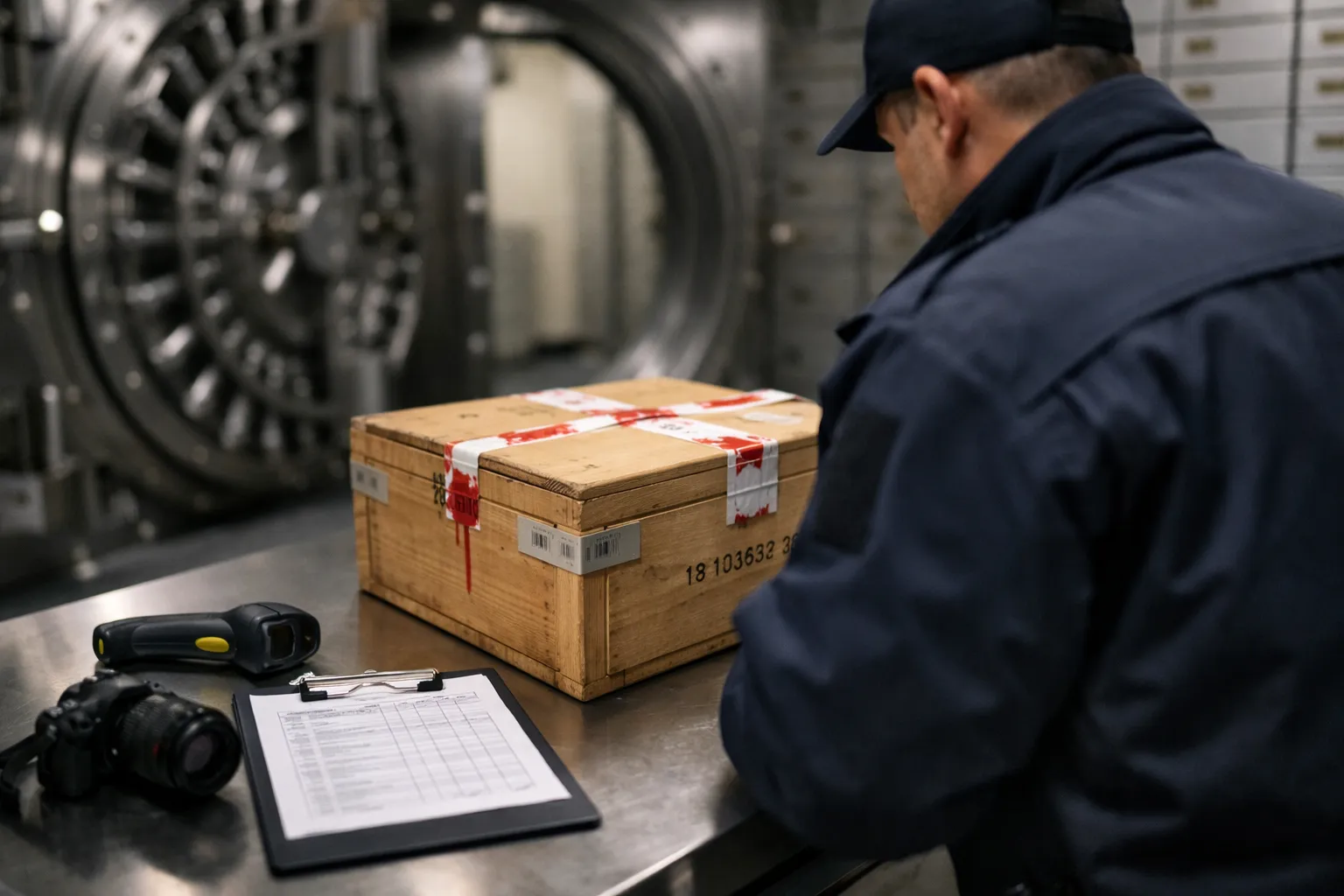
Moving physical gold between international vaults is a routine task for institutional investors and private holders alike—but it remains one of the most operationally complex activities in the precious‑metals market. Mistakes can be costly: unexpected taxes, shipping losses, failed custody handoffs or chains of custody that undermine the asset’s acceptability at the receiving vault.
This guide walks you, step‑by‑step, through a cross‑border bullion transfer in 2026. It focuses on practical actions: how to plan, what documents to assemble, which service providers to consider, cost ranges, compliance checkpoints and the verification you must insist on when the shipment completes.
When and why you might move bullion
- Consolidation: reduce multiple storage locations to lower fees or simplify estate planning.
- Relocation: taking residence to another country or repatriating holdings.
- Counterparty change: switching vault operator for better segregation, auditability or insurance terms.
- Sale or liquidity needs: moving metal to the market or to a buyer’s nominated vault.
- Political or regulatory risk mitigation: moving between jurisdictions (e.g., London ↔ Zurich ↔ Singapore ↔ Dubai) to diversify geopolitical exposure.
Overview: the seven core steps
- Define objectives and constraints
- Due diligence: vault and carrier selection
- Cost estimate and contract terms
- Documentation and compliance
- Packing, seals and chain‑of‑custody procedures
- Transit and monitoring
- Receiving, inspection and reconciliation
1. Define objectives and constraints
Before you contact a carrier or the receiving vault, be explicit about:
- The destination vault (operator, city, account/reference number).
- Desired custody type at destination: fully segregated allocated bars, client‑segregated but fungible, or pooled (unallocated) holdings.
- Time sensitivity—overnight regional move versus standard international.
- Maximum acceptable total cost (shipping + insurance + tax + handling).
- Regulatory constraints: are you exporting from or importing to jurisdictions with special declarations, VAT or capital controls?
2. Due diligence: vault and carrier selection
Use a three‑pronged approach: regulatory status, operational transparency, and client references.
- Vault operator: confirm licencing (e.g., Singapore SAFE licences, Dubai DMCC vault status, Swiss cantonal vault regulations, UK FCA oversight where relevant), segregation options, audited inventories and frequency of independent audits.
- Carrier: prefer global, precious‑metals specialists such as Brinks, Malca‑Amit, Loomis or similar firms with experience on your route. Check insurance limits, in‑transit control measures and country presence.
- References and track record: request recent client references for similar routes and values. Ask about past incidents, resolution and claims history.
3. Cost components and ballpark ranges (2026)
Costs vary by route, value, and service level. Below are typical components and ranges to budget—use them as planning estimates and confirm quotes before booking.
- Outbound handling / administration at origin vault: often a flat fee or per‑item fee — typical range $50–$500.
- Carrier handling/shipping: small regional moves might run $200–$1,500; intercontinental moves commonly $1,000–$5,000 depending on speed and security level.
- In‑transit insurance: commonly charged as a percentage of declared value per transit. Typical market range in 2026: 0.05%–0.5% of declared value per transit (lower for high‑volume institutional programs; higher for bespoke or high‑risk routes).
- Inbound vault acceptance: inbound handling and intake inspection fees $50–$400; bar re‑assay or verification may be extra.
- Vault storage: monthly fees vary by provider and by allocated vs pooled—typical 0.02%–0.10% of stored value per month, or per‑bar flat fees in some facilities.
- Customs, duties & taxes: many jurisdictions exempt investment gold from VAT (for example, EU and UK investment gold exemptions continue to apply broadly), but import clearance and reporting fees still apply. Always verify with local customs and a tax advisor.
Example: a USD 500,000 consignment moved London→Singapore might incur outbound $200, carrier $1,500, insurance at 0.2% = $1,000, inbound $250 = total ≈ $2,950. Actual quotes vary—always obtain firm written estimates.
4. Documentation and compliance checklist
Assemble these documents well before shipment:
- Proof of ownership: originals or certified copies of purchase invoices, serial numbers or certificates of authenticity.
- Chain‑of‑custody manifest: listing bar IDs, weights, declared value, packing details and seals.
- Customer identification: government ID, proof of address and beneficial‑owner declarations to satisfy AML/KYC rules.
- Export/import declarations: where required by customs. Even where no duty applies, most customs authorities require declarations for high‑value shipments.
- Transfer order or vault instruction: signed instructions to the origin and destination vaults detailing the transfer and custody type.
- Insurance binder: declaration of value and named insured with the insurer/underwriter.
Tip: many vaults will not allow shipping without a complete KYC/AML file on record. Start the paperwork 7–14 days before the planned pickup.
5. Packaging, seals and chain‑of‑custody
Proper packaging and seals materially reduce risk and accelerate acceptance.
- Use tamper‑evident crates or envelopes approved by the carrier. Bars should be in their original refinery packaging where possible.
- Apply serialized security seals and record their numbers on the manifest.
- Photograph each bar and the sealed crate, including close‑ups of serial numbers and seals; time‑stamped photos assist claims and acceptance.
- Consider double‑sealing: sealed inner bags inside a sealed crate to reduce tamper risk at intermediate transshipment points.
6. Transit execution and monitoring
Key operational controls during movement:
- Armed courier vs. unarmed: for high‑value international moves choose the carrier’s armored option and avoid unescorted couriers.
- GPS tracking and real‑time monitoring: insist on visible tracking and regular check‑ins; get carrier escalation contacts in writing.
- Staging and handoffs: minimize the number of transshipment points. Each handoff increases risk and paperwork.
- Insurance activation: ensure the insurer has recorded the declared value and the exact route and service level; coverage gaps occur if service level or route changes.
7. Receiving, inspection and reconciliation
Don’t accept "paper confirmation" as final. Insist on physical verification.
- Inspection: receiving vault should open seals in your presence (or your nominated third party) and verify bar serial numbers, weights and assay marks against the manifest.
- Photographic evidence: request photos and a signed receiving report that references serial numbers and seal integrity.
- Segregation confirmation: get a written statement that the bars are held as allocated and identify the account number and storage location.
- Discrepancies: if anything differs, refuse acceptance, document the discrepancy, and lodge an insurance claim immediately with the carrier and underwriter.
Common pitfalls and red flags
- Carrier or vault that refuses to disclose insurance underwriters or limits.
- Requests to ship without serial numbers, or to commingle allocated bars with pooled inventory during transit.
- Unsolicited offers to “personally courier” bullion without established security infrastructure.
- Vaults that cannot provide recent independent audit reports or that delay providing segregation statements.
- Surprise charges: insist on an all‑in quote and explicit breakdown of handling, storage, customs and tax liabilities.
Practical timeline and sample checklist
Typical schedule for a cross‑border transfer (e.g., London→Zurich or London→Singapore):
- Day −14 to −7: Select vault and carrier; start KYC; request quotes and insurance binder.
- Day −7 to −3: Complete documentation; issue transfer instructions to origin & destination vaults; schedule pickup.
- Day −2 to 0: Carrier collects, seals crate; photos and manifest prepared. Transit begins.
- Day 1–7: Transit and monitoring (time depends on routing and customs). Carrier provides updates.
- Day of arrival: Receiving vault inspects, photographs and issues signed acceptance report.
- Post‑move: reconcile paperwork, update inventory records and tax reporting as required.
Decision matrix: when moving is justified
Consider moving bullion when one or more of the following is true:
- Annual savings in storage and operational complexity exceed one‑time transfer costs within an investor’s acceptable horizon (6–24 months).
- New vault offers materially better segregation, auditability or insurance that reduces ongoing counterparty risk.
- Geographic diversification reduces political or regulatory exposure in a way that aligns with the investor’s risk tolerance.
- Personal relocation requires repatriation of assets for estate or residency planning.
Final practical tips
- Always obtain firm written quotes and an explicit list of what would void insurance (route changes, intermediate storage with third parties, inadequate packing).
- Use independent verification: a third‑party inspection firm or a trusted local representative can save weeks of disputes later.
- Keep a complete and time‑stamped photographic record from origin to destination, and store all paperwork in multiple secure locations.
- Engage a tax and legal advisor familiar with the specific jurisdictions involved—customs and VAT treatments can change and differ by bar type (coins vs bars, refined vs cast).
- For high‑value or frequent transfers, negotiate service level agreements with carriers and vaults that include guaranteed liability caps, response times and audit access.
Moving physical gold internationally is manageable when approached as a project: plan the objective, choose reputable partners, secure comprehensive insurance and verify every step on arrival. For serious investors, the security of the operation is as important as the bullion itself.