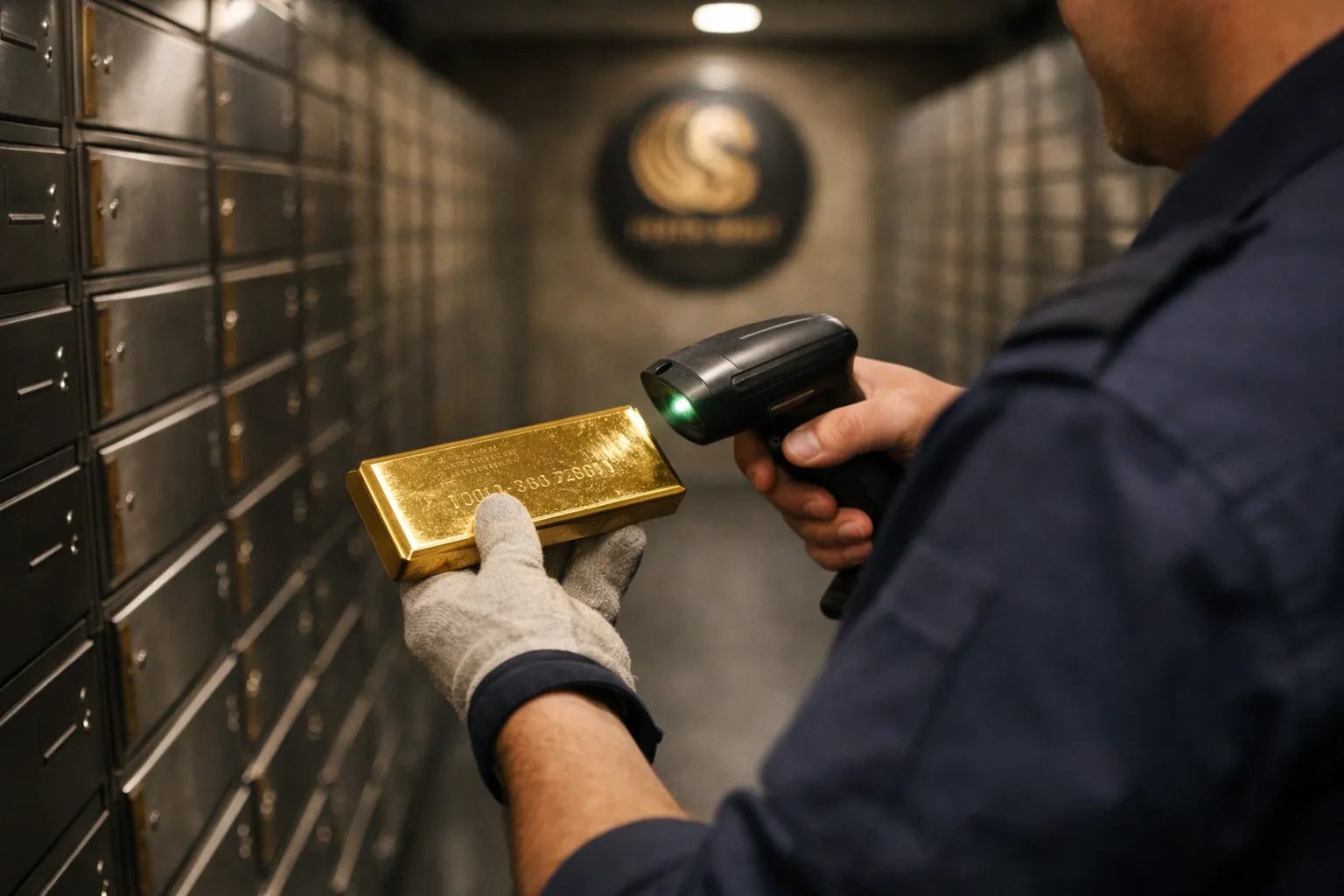
The Perth Mint Depository (PMD) is one of the best-known allocated bullion storage options for private and institutional investors who want physical, segregated gold held by a state-backed mint. This review evaluates PMD's governance, custody model, redemption and delivery mechanics, costs and liquidity, and ultimately whether it suits different types of gold investors in October 2026.
What the Perth Mint Depository offers
The Perth Mint is an institution owned by the Government of Western Australia; its depository services are operated under the Mint's regulatory and operational framework. The depository provides allocated, segregated storage of government-minted bars and coins (serial-numbered where applicable), legal-title ownership documentation, periodic reporting for account holders, and options for physical delivery or sale through authorised channels.
Key features
- Allocated, segregated custody: metal is held as distinct, customer‑identified bullion rather than pooled or fungible balances.
- Legal-title documentation: customers receive paperwork confirming ownership and bar/coin serials where relevant.
- Government-owned operator: the Perth Mint is a government-owned entity, which affects governance, reputational risk and certain legal frameworks.
- Redemption and delivery options: PMD supports outbound delivery of physical metal and sale/redemption through appointed dealers and agents.
- Reporting and auditability: periodic statements and audit trails are provided to account holders; customers can request verification of holdings.
How it compares with other custody choices
For readers weighing PMD against private vaults, bullion dealers’ vaults, or bullion ETFs, the distinctions are practical:
- Compared with unallocated dealer accounts, PMD’s allocated custody removes counterparty exposure to pooled liabilities; investors have a direct claim to identifiable bars/coins.
- Compared with major commercial vault operators (Brink’s, Loomis, Malca‑Amit), PMD’s differentiator is its state-owned mint status and the direct mint-to-storage chain for Perth Mint products—appealing to buyers who prioritise provenance from a sovereign mint.
- Compared with ETFs, PMD gives outright physical ownership and the option to take delivery—important for investors whose objective is possession or removal of financial intermediaries’ layers.
Pros — What PMD does well
- Strong provenance: bars and coins minted by the Perth Mint carry recognisable hallmarks and are widely accepted by dealers and refineries.
- Transparency and legal title: allocated holdings with serialised pieces reduce ambiguity over ownership and aid provenance when selling.
- Institutional-grade custody: vault infrastructure and security protocols meet the expectations of private bullion holders and intermediaries.
- Global market acceptance: Perth Mint minted bullion trades readily on secondary markets and is accepted by many refineries for melt/assay.
- Clear redemption route: customers have documented processes to request physical delivery or sale through the Mint’s channels and partners.
Cons — Limitations and pain points
- Not the lowest cost for trading: allocated, segregated storage typically costs more than pooled/unallocated accounts or ETFs if active trading is the goal.
- Delivery lead times and logistics: physical deliveries from Australia incur time, customs paperwork and freight costs; not ideal for investors needing instant liquidity.
- Geographic considerations: while globally reputable, having metal stored in Australia may complicate tax, inheritance and withdrawal logistics for some jurisdictions.
- Fee transparency varies by channel: dealers and agents who sell Perth Mint storage packages sometimes embed fees or minimums—investors must read fee schedules carefully.
Practical suitability — who should consider PMD
Perth Mint Depository is best suited to:
- Long-term allocators who want identifiable, government‑minted bullion held in an allocated account and who prioritise provenance and legal clarity over lowest possible custody costs.
- Investors planning occasional physical delivery or inheritance arrangements who value government-owned mint documentation and serialised inventory.
- Those diversifying storage jurisdictionally away from their home country for geopolitical or estate-planning reasons—provided they are comfortable with cross-border logistics.
PMD is less suitable for:
- High-frequency traders or dealers who need same-day liquidity and minimal custody expense—ETFs or institutional pooled vaults are often cheaper and faster for trading.
- Small investors for whom minimums, delivery costs or account handling fees make per-gram costs uneconomic.
- Investors in jurisdictions with restrictive import/export or tax rules that make overseas repatriation complex or expensive.
Due diligence checklist before you open an account
- Ask for the current published fee schedule and whether storage, administration, assay and redemption fees are separate or bundled.
- Confirm allocation mechanics: will you receive serial numbers and photos, or is allocation by bar batch only?
- Understand redemption and delivery steps, timelines and estimated logistics costs to your country of residence.
- Request the latest audit or attestation reports and the frequency of independent verification of holdings.
- Check AML/KYC implications and whether your country’s tax rules require additional reporting for overseas-held precious metals.
- Clarify succession and beneficiary procedures: how will holdings be transferred in case of death or incapacity?
The 2026 context — why custody choice matters now
As of October 2026, central-bank purchases and geopolitical uncertainty continue to support interest in physical bullion. Real yields, currency fluctuations and concerns about counterparty concentration have pushed some investors back toward allocated storage. Under these conditions, custodial choice matters: provenance, documented legal title and the ability to take physical delivery are primary considerations for buy-and-hold investors.
Bottom line
The Perth Mint Depository is a credible, high‑quality solution for investors who prioritise allocated ownership, mint provenance and state‑backed operational continuity. It is not the lowest-cost option for active trading or for very small holdings, and physical delivery from Australia carries time and cost. For long-term bullion owners who care about identifiable bars, legal-title documentation and a custodial chain that begins at a sovereign mint, PMD remains a compelling choice—provided prospective customers perform the fee, audit and logistics due diligence outlined above.