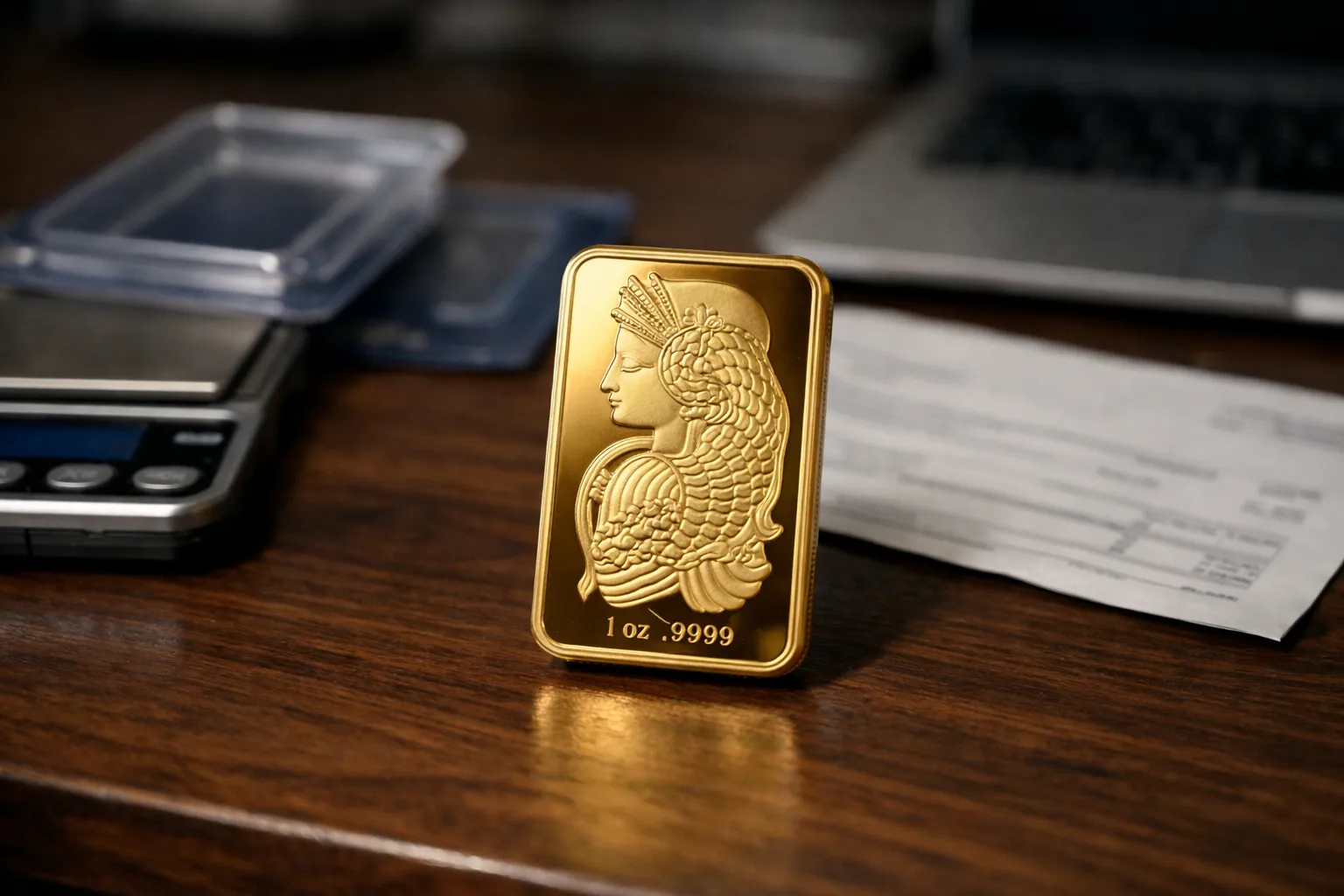
In a market crowded with coins and branded bars, the PAMP Suisse Fortuna 1 oz gold bar remains a perennial favorite among private investors and dealers. This review, current to October 2026, assesses the 1 oz Fortuna’s physical attributes, security features, dealer liquidity, premium drivers, holding and storage considerations, and where it fits inside a practical bullion allocation.
What the PAMP Fortuna 1 oz bar is
PAMP Suisse’s Fortuna motif — the blindfolded Roman goddess of fortune balancing a cornucopia and wheel — is one of the most recognizable designs in modern bullion. The 1 oz bar is minted to 99.99% fine gold and marketed primarily to retail and private investors who want a combination of aesthetic appeal and broad market acceptance.
Key, verifiable attributes
- Metal: 24-karat gold, .9999 fine (typical for PAMP bullion).
- Weight: 1 troy ounce (precise weight stamped on bar).
- Packaging: sold in tamper-evident blister packs from dealers; larger sealed formats available through some distributors.
- Brand recognition: PAMP Suisse is a long-established Swiss refiner with global distribution channels, which supports secondary-market acceptance.
Security and authentication
PAMP’s consumer-oriented bars place emphasis on visible quality controls. The Fortuna design is finely struck with high relief, and the company uses consistent finishes and branding that make counterfeits comparatively easier to spot for experienced dealers.
For investors: examine the bar’s finish, edge lettering (where present), serial stamps (on larger formats), and packaging integrity. When buying in person or online, insist on buying from established dealers who provide clear return and authentication policies; for larger purchases, consider buying bars that come with an assayer’s card or sealed assay packaging when available.
Liquidity and secondary-market characteristics
Liquidity is the primary reason many investors choose 1 oz bars over larger ingots or small fractional pieces. PAMP 1 oz Fortuna bars are widely accepted by bullion dealers, pawn shops, and online secondary markets, and can be sold in most major bullion marketplaces without the sorting and verification friction that affects unbranded scrap gold.
- Dealer acceptance: high in North America, Europe and parts of Asia due to the PAMP brand and consistent finish.
- Resale ease: 1 oz units match many dealers’ buyback lot sizes—this reduces the time and transaction cost of selling compared with unusual weights.
- Price discovery: because they trade frequently, bid/ask spreads for PAMP 1 oz bars tend to be competitive versus less-common branded bars.
Premiums and cost considerations
Premiums over spot for the Fortuna 1 oz reflect production, branding and dealer margin. Factors that raise or lower the premium include:
- Market volatility and dealer inventory levels: tight supply elevates premiums; heavy inventory reduces them.
- Geographic market: premiums vary by region and by the local tax/tariff environment.
- Packaging and condition: bars sold in intact blister packs or sealed formats typically command a small price advantage versus loose bars that require re-verification.
For investors buying multiple ounces, compare offers across reputable dealers and include shipping and insured-transport costs in the all-in calculation. If your objective is long-term physical holding, a slightly higher upfront premium for branded, readily resalable bars can be a rational trade-off for easier exit.
Pros and cons — practical investor lens
Pros
- Brand recognition and dealer acceptance make liquidation straightforward.
- Attractive design that appeals to both collectors and investors, aiding resale to a broader buyer base.
- Standard 1 oz weight aligns with common retail and wholesale trading units, improving price discovery.
Cons
- Premiums are higher than generic poured or unbranded rounds; repeated purchases can cost more over time.
- As a mass-market product, it offers limited numismatic upside — value lies mainly in the metal content and brand liquidity.
- For very large allocations, the per-ounce premium of 1 oz bars can make larger-format bars (10 oz, 1 kg) more cost-effective.
Storage, tax and portfolio fit
How the Fortuna 1 oz bar fits in your portfolio depends on your goals:
- Short-to-medium-term investors who value quick liquidity and easy portability will appreciate the 1 oz unit size.
- Long-term, cost-conscious allocators may favor larger bars for lower per-ounce premiums but should weigh the trade-off in resale granularity.
- Storage choice—home safe, allocated vault, or dealer depository—impacts overall cost and practical access. Packaging integrity matters if you rely on quick redeployment or sale.
Tax treatment varies by jurisdiction; consult a tax professional for capital gains, VAT, or collectibles rules that may affect buying and selling decisions in your country.
Who should buy the PAMP Fortuna 1 oz?
These bars are best for investors who prioritize:
- Immediate resale options across multiple markets.
- Standardized, recognizable bullion that avoids the verification delays of private-label or unbranded ingots.
- A balance between attractive presentation and fungibility — for gifting, stacking, or sale to retail buyers.
They are less suitable for investors whose primary objective is minimizing cost-per-ounce at large scale (multi-kilo holdings) or those seeking strictly privacy-focused, unbranded bullion solutions.
Bottom line — practical verdict (October 2026)
For private investors seeking a balance of liquidity, recognizability and portability, the PAMP Fortuna 1 oz gold bar remains a strong, conservative choice in 2026. It carries a modest premium for brand and finish, but that cost often pays for itself at resale through lower friction and faster trade execution. If you need cheap per-ounce acquisition for a very large allocation, supplement Fortunas with larger-format bullion; if you prioritize immediate resale and a marketable product, Fortunas deserve a place in the mix.
Buyers should source Fortunas through established dealers, check packaging and condition on delivery, and factor all-in costs (premium, shipping, insurance, storage) into allocation decisions. As with any physical bullion, match the product to your liquidity needs and storage preferences rather than chasing aesthetics alone.