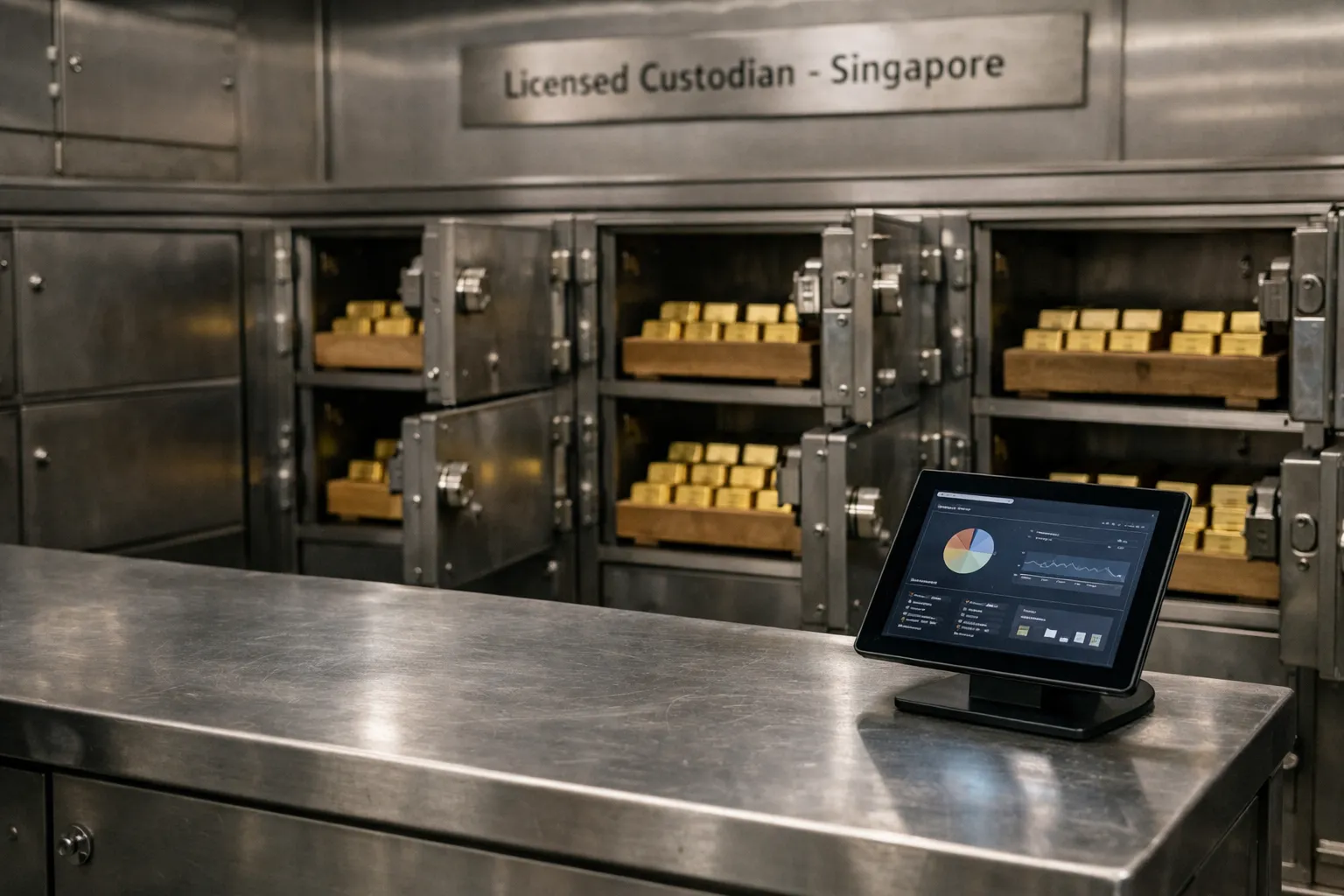
Singapore — In a move that could reshape bullion markets in Asia, the Monetary Authority of Singapore (MAS) granted a full licence in August 2026 to the region’s first regulated exchange that trades tokenized, allocated physical gold. The approval covers an electronic trading venue, integrated custodial services for allocated bars and coins, and on‑chain transfer infrastructure designed to settle ownership of specific, insured bullion holdings.
What MAS approved — and what it did not
Masthead regulators approved a single operator to run an exchange where each digital token represents a defined, segregated quantity of physical gold held in insured vaults in Singapore and partnered vaults elsewhere. The licence authorises centralised order matching, regulated client onboarding (including KYC/AML checks), and mandatory proof‑of‑reserves disclosures by third‑party auditors.
MAS did not approve tokenized instruments that purport to represent pooled or unallocated gold without explicit client rights to specific bars; those products remain subject to existing securities and commodities rules. The regulator emphasised custody separation, binding delivery rights and insured physical‑redemption mechanisms as conditions for market access.
Why this matters now
- Asia is the world’s largest physical gold market by volume. A regulated, tokenized market in Singapore lowers frictions for ASEAN and South Asian investors seeking allocated ownership with digital transferability.
- Tokenization promises faster, lower‑cost transfers between counterparties and exchanges, potentially reducing premiums tied to logistics and bilateral counterparty risk.
- Regulatory clarity from MAS creates a compliance template other Asian regulators may mirror—encouraging banks, vault operators and bullion dealers to adopt standardized custody and proof‑of‑reserves practices.
Likely effects on vault flows and premiums
Industry participants expect an initial shift of bullion demand toward Singapore vaults, especially from tech‑savvy investors and regional dealers. Allocated holdings that are tokenized and tradable on a licensed venue can be re‑allocated between counterparties without physical movement—reducing short‑term vault logistics and insurance lifts.
That said, physical delivery remains an enforceable right under the licence. For investors who value guaranteed on‑chain ownership matched to a uniquely identified bar or coin, the product narrows the liquidity premium gap between allocated bullion and paper substitutes (ETFs, unallocated accounts). Expect premiums for tokenized, allocated gold to sit between allocated physical held privately and mainstream allocated ETFs — lower than bespoke private allocated custody yet higher than large, pooled ETFs due to insured segregation and deliverability.
Risks and operational caveats for investors
Tokenized allocation reduces certain frictions but introduces new operational and counterparty considerations investors must weigh:
- Custody and segregation: Verify whether tokens map to fully segregated bars with serial numbers, metallurgical certificates and independent custody confirmations.
- Proof‑of‑reserves: Insist on frequent, third‑party attestations and look for attestation scope that validates physical existence, insurance coverage and chain of title.
- Redemption mechanics: Read the fine print on delivery windows, minimum redemption sizes, and fees for physical withdrawal versus on‑exchange transfer.
- Smart‑contract and platform risk: Though ownership is represented on‑chain, settlement and legal enforceability rely on exchange rules and custodial contracts—understand the legal jurisdiction and dispute resolution pathways.
- Insurance and insolvency: Confirm insurance limits and how insolvency ring‑fencing is enforced under Singapore law.
What this means for established bullion centres
London, Zurich and Dubai have long been global clearing and vaulting hubs. Singapore’s new regulated venue will not supplant those markets overnight, but it strengthens Asia’s onshore alternative. Expect coordinated service offerings: London vault operators could offer linkages to tokenized‑gold platforms, and Singapore vaults may expand partnerships with banks in the Gulf and India.
For bullion banks and refineries, the new exchange creates a standardized way to move allocated metal electronically, lowering settlement time and operational costs in regional trades. That could compress inter‑dealer margins and nudge some OTC activity onto regulated rails.
Investor playbook
- Due diligence: Before buying tokenized allocated gold, request the token‑to‑bar reconciliation process, auditor names, insurance policy details and the exchange’s redemption rules.
- Compare total cost: Factor in custody and trading fees, redemption charges and any network costs versus traditional allocated storage or ETFs.
- Test small: Use the exchange’s custody and redemption process with a modest allocation to validate procedures and settlement times.
- Consider allocation role: Tokenized, allocated gold is best seen as a hybrid — offering digital transferability with physical backing — and should be sized within portfolios accordingly.
Outlook
MAS’s licence signals regulatory appetite in Asia for supervised tokenized commodities with clear legal and operational guardrails. For gold investors, the development widens options: a regulated bridge between physical allocation and digital market plumbing. The next 6–12 months will reveal how quickly vault flows adjust and whether other Asian regulators adopt similar frameworks. For now, investors should view the Singapore market as an additional, regulated channel to obtain allocated, deliverable gold with on‑chain transferability—provided they perform standard custody and legal due diligence.