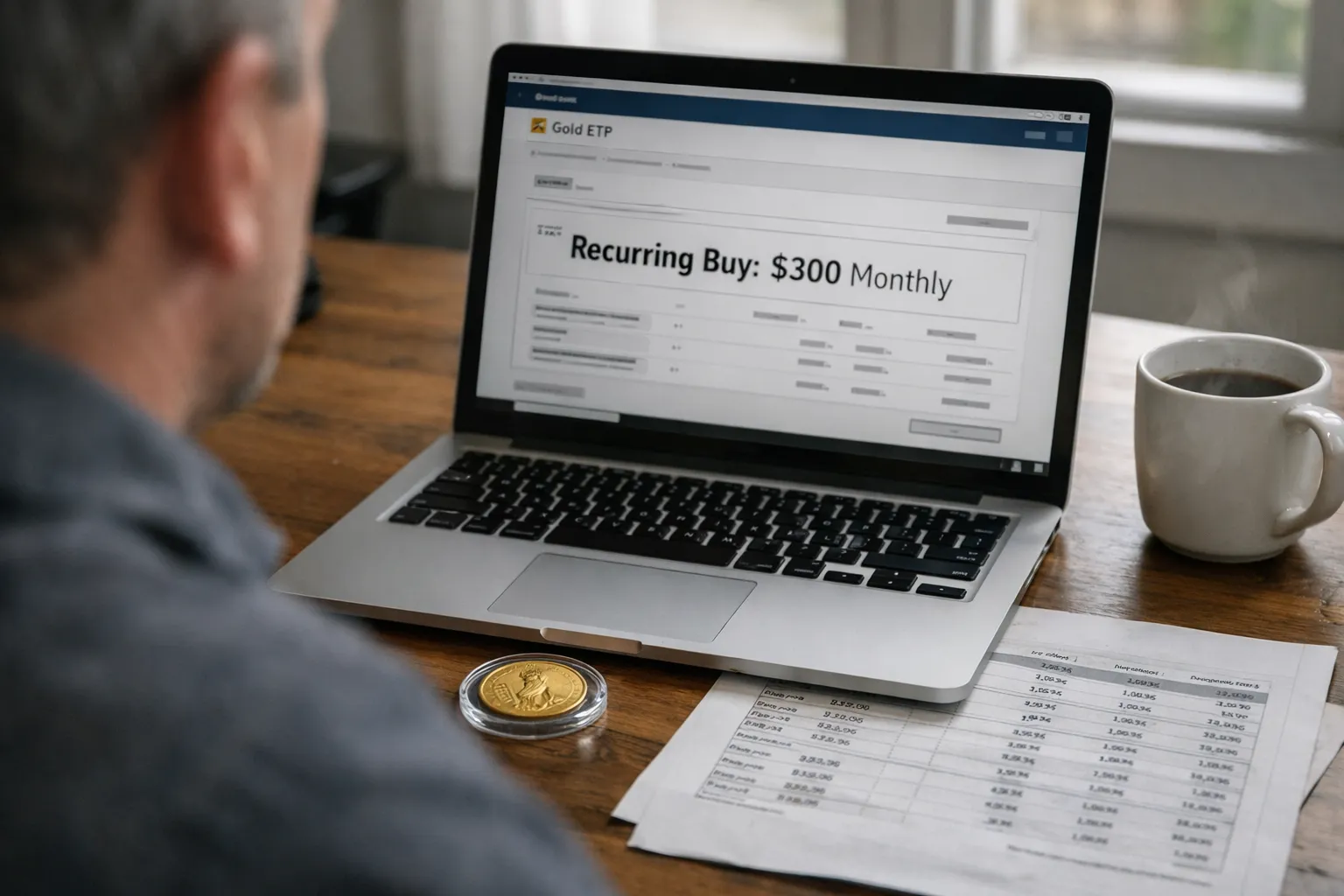
Dollar‑cost averaging (DCA) — investing a fixed sum at regular intervals — remains one of the simplest, lowest‑behavioral‑risk ways to build gold exposure. This update brings the August 2026 guide current to October 2026 by highlighting product developments, market structure considerations, and practical changes in automation, custody and cost modeling that matter to gold investors today.
This guide is for individual investors and advisers who want a repeatable, low‑emotion process to accumulate gold over months or years. You’ll get updated vehicle comparisons, an operational checklist you can implement this week, and concrete instructions for keeping your DCA plan resilient to the new product types and regulatory checks that have become common in 2026.
Prerequisites and context
Before you begin, make sure you can answer three basic questions:
- Why do you want gold exposure? (diversification/inflation hedge, liquidity reserve, speculation)
- How much can you commit regularly and for how long? (sustainable monthly amount and horizon)
- Where are you tax‑resident and what recordkeeping systems will you use? (tax treatment varies materially)
Why this matters now: product innovation since 2022 has accelerated. Tokenized and fractional gold products are more widespread; recurring‑buy features at brokerages are now standard; and regulators in multiple jurisdictions have increased disclosure expectations for "digital gold" providers. Those factors change the implementation risk even if the DCA philosophy remains unchanged.
1. Decide your objective and horizon
Be explicit. Typical objectives map to different vehicles:
- Long‑term portfolio allocation (5+ years): favors allocated physical bullion in professional vaults or low‑cost physically backed ETFs with strong governance.
- Medium horizon / liquidity reserve (1–5 years): ETFs and high‑transparency allocated digital vaults offer faster liquidity.
- Short‑term/speculative accumulation: tokenized gold trading on exchanges can be efficient but carries technology, custody and regulatory risk.
Document the objective in writing — it guides vehicle choice, storage and tax planning.
2. Choose the vehicle: updated pros, cons and selection checklist
There are three broad categories. Below are practical updates and what to check in 2026.
Physical bullion (bars and government mint coins)
- Pros: Tangible ownership, minimal third‑party operational dependency.
- Cons (2026 nuances): Dealer premiums remain material for low monthly purchases; professional vaulting costs have become more tiered (many vaults now offer micro‑storage pricing and batch aggregation). Home storage still requires separate insurance and estate planning.
- Practical selection checks: demand proof of allocated (segregated) storage, independent audit certificates, transit insurance and published fee schedules. Prefer vaults with transparent withdrawal windows and published lead times.
Physically backed ETFs and trusts
- Pros: Traded like stocks, low friction with brokerage automation, predictable expense ratios.
- Cons (2026 nuances): Some funds now publish quarterly in‑kind creation/redemption statistics and lending revenue; review these to understand tracking and counterparty exposure. ETF liquidity remains excellent for large, established tickers (e.g., SPDR Gold Shares, iShares Gold Trust); confirm bid/ask spreads before recurring buys.
- Practical selection: compare expense ratio, average daily volume, issuer transparency, and whether the fund reports holdings and audits frequently.
Allocated digital gold and tokenized gold
- Pros: Often lower friction, fractional ownership and immediate transferability on supported platforms.
- Cons (2026 precautions): regulatory scrutiny has increased; some providers now publish proof‑of‑reserve attestation and full chain‑of‑custody reports — these are essential. Smart‑contract risk, wallet custody options and on‑chain vs off‑chain redemption mechanics vary widely.
- Practical selection: prefer providers that publish monthly third‑party reserve attestations, allow physical redemption (or explicit conversion to allocated bullion), and are regulated in your jurisdiction.
3. Set the mechanics: frequency, amount and start date
Updated best practice:
- Match frequency to cash flow and recordkeeping. Monthly still wins for most investors — it aligns with pay cycles and simplifies statements.
- Pick an amount you can sustain through market cycles. DCA's value is consistency; avoid "tapering" amounts based on short‑term price moves.
- Automate and set execution rules (limit vs market orders) in advance.
Illustrative example for modeling: $300/month into a physically backed ETF with a 0.25% expense ratio. After one year you will have invested $3,600. Average balance over the year ≈ $1,800 so the annualized expense drag ≈ $4.50 — small but cumulative. For physical bullion, factor in average purchase premium (e.g., 2–6% depending on coin/bar) and storage fees (often 0.2–0.6%/yr for professional vaults).
4. Cost comparison: build a live monthly ledger (how to update in 2026)
Actionable steps:
- Open a simple spreadsheet with these columns: date, vehicle, units, local currency price, purchase fee/premium, storage fee (if charged that month), brokerage commission, settlement cost, custody provider and reference invoice.
- Source live data each month from authoritative pages: LBMA spot gold (for reference), ETF issuer factsheet (expense ratio, AUM, average daily volume), vault provider fee schedule, and dealer price lists.
- Model total expected annual cost = purchase drag + running cost + exit cost. Use scenario rows (low, mid, high) to see sensitivity.
Practical tip: many brokerages now let you export recurring‑buy trades as CSV. Automate a monthly import to keep the ledger updated without manual entry.
5. Automate purchases and execution rules
Automation remains the single most effective way to remove behavioral drift. Updated options in 2026:
- Broker recurring buys with fractional shares: most U.S. and many European brokers now support fractional ETF purchases on a recurring schedule.
- Dealer monthly purchase plans: several bullion dealers and vaults offer subscription plans that combine monthly purchases with immediate vaulting and consolidated invoices.
- Automated transfers to digital gold providers: use a standing bank order to fund a digital vault account, then enable auto‑conversion if supported.
Execution rules to set now:
- For low‑liquidity products or small token markets, use limit orders to avoid slippage; for large ETFs prefer market orders at scheduled times.
- Stagger execution time (e.g., 1st business day of month) to avoid end‑of‑month settlement congestion.
- Set alerts for failed payments or delivery delays — automation is only as good as your monitoring.
6. Taxes and recordkeeping (updated checkpoints)
Tax regimes vary; update these checks for October 2026:
- Maintain a purchase ledger with invoice numbers and custody receipts. For tokenized assets, export blockchain transaction IDs and provider attestations alongside fiat purchase records.
- Confirm the tax classification of each vehicle in your jurisdiction — ETF, trust, physical collectible or electronic commodity can trigger different rates. In the U.S., many physically backed gold ETFs and physical bullion are treated under the collectibles rules; consult a tax advisor for your specific holdings.
- Watch regulatory guidance: since 2024 regulators in several markets started issuing guidance on "digital assets backed by real assets" — verify whether tokenized gold platforms have new reporting obligations for holders in your country.
Tip: Keep digital and fiat records together (screenshots of provider attestations, monthly vault reports, and blockchain transaction proofs) to simplify audits.
7. Storage and security choices for physical DCA
Updated considerations:
- Micro‑storage and pooled‑segregation options have proliferated. If you choose pooled solutions, confirm legal title and conversion mechanics to allocated (segregated) holdings.
- For home storage, insurers increasingly require third‑party proof of safe installation; check policy terms carefully.
- When using a vault provider, verify independent audits, reserve attestations and published insurance limits. Prefer vaults that name the insurer and scope (e.g., transit, on‑site theft, and natural disaster coverage).
8. Monitoring, rebalancing and exit rules
Set rules before you start:
- Monitoring cadence: quarterly is sufficient for most DCA plans. Track total invested, current market value and annualized IRR in your ledger.
- Rebalancing: use new DCA funds to rebalance first. If allocation shifts beyond your tolerance band (e.g., ±3–5%), consider partial sales according to pre‑defined rules.
- Exit triggers: predefine conditions to pause/stop DCA — major tax law changes, significant custody provider red flags (missed attestations), or personal liquidity needs.
9. Common pitfalls and how to avoid them (2026 edition)
- Chasing short‑term price action: DCA’s discipline is its core benefit. Don’t increase or stop contributions based on short‑term volatility.
- Accepting opaque reserve claims: avoid digital gold providers that don’t publish third‑party attestations and proof‑of‑reserve details.
- Ignoring redemption mechanics: some tokenized gold requires multi‑day withdrawal windows or minimum thresholds for physical delivery — know these before you rely on liquidity.
- Underestimating cumulative costs: small recurring premiums and fees compound over years. Model scenarios for 3, 5 and 10 years.
10. Starter checklist you can execute this week (updated)
- Write down your objective and horizon (one sentence).
- Choose the vehicle: shortlist 2 options (example: GLD or a regulated tokenized gold provider that publishes monthly attestations).
- Decide frequency and amount (e.g., $300/month) and map to your pay cycle.
- Open or confirm accounts: brokerage for ETFs; dealer + vault account for physical; digital provider for tokens. Request and archive the provider’s latest audit/attestation.
- Build a one‑tab spreadsheet with inputs: monthly contribution, expected premium, expense ratio, storage fee. Leave fields editable so you can update live quotes each month.
- Enable automatic funding and recurring buy; set order type (limit/market) and check for fractional share support.
- Schedule quarterly reviews and create a tagged folder for invoices, attestations and trade confirmations (cloud or encrypted drive).
Pro tips
- Use the same day each month for purchases to simplify reconciliation (e.g., 3rd business day).
- For tokenized products, require on‑chain proof (transaction hash) in addition to issuer attestations — it helps trace flows if the provider changes custody arrangements.
- When you reallocate, make changes to contributions rather than liquidating positions where possible — minimizes realized tax events.
Where to get current data and what to check monthly
Before each monthly entry, update three reference numbers:
- LBMA AM/PM gold spot price (for valuation baseline).
- Fund factsheet for ETFs (expense ratio, AUM, average daily volume, creation/redemption notes).
- Vault or provider attestation (most reliable providers publish monthly reserve reports).
Sources: World Gold Council demand reports, issuer websites (ETF factsheets), LBMA and vault provider publications. Bookmark the issuer fact page so you can quickly check for policy or fee changes.
FAQ
Is a physically backed ETF always cheaper than buying coins monthly?
Not always, but often for small recurring purchases. ETFs avoid dealer premiums and often allow fractional purchases, so for monthly plans under a few thousand dollars ETFs typically have lower friction. For large lump sums (kilo bars, bulk buys) and long planning horizons, allocated physical with low vault fees can be more cost‑efficient. Model your specific numbers in a spreadsheet.
How do I verify a tokenized gold provider actually holds the metal?
Look for monthly third‑party attestation or audit reports that list bars by serial number and custody location. Prefer providers that publish chain‑of‑custody reports and allow physical redemption or conversion to allocated bullion. On‑chain proof of token issuance is helpful but must be matched to off‑chain reserve attestations.
Can I automate DCA into physical gold?
Yes. Several dealers and vaults now offer subscription purchase plans that automate buying and immediate vaulting. These consolidate invoices and can enroll purchases into allocated storage. Verify fees, minimums and delivery/withdrawal lead times before enrolling.
What tax mistakes do DCA investors commonly make?
Failing to keep consolidated records across vehicles (ETFs, tokens, physical) is the top mistake. Also, not confirming tax classification of each vehicle in your jurisdiction can lead to unexpected tax rates on sale. Always retain invoices, settlement confirmations and custody attestations.
When should I stop or pause my DCA plan?
Define triggers in advance: reaching target allocation, a major change in tax law affecting your holdings, failed attestations from your custody provider, or a change in personal liquidity needs. Pausing because of short‑term price moves defeats the purpose of DCA.
Conclusion
Dollar‑cost averaging into gold in October 2026 uses the same behavioral advantages as before: discipline and simplicity. The practical differences today are operational — more fractional options, tokenized products, and higher disclosure expectations from reputable providers. Update your cost model monthly, require attestations from custodians and token issuers, automate contributions, and keep a single source of truth for records. With those controls in place, DCA remains a low‑friction way to build durable exposure to gold.