
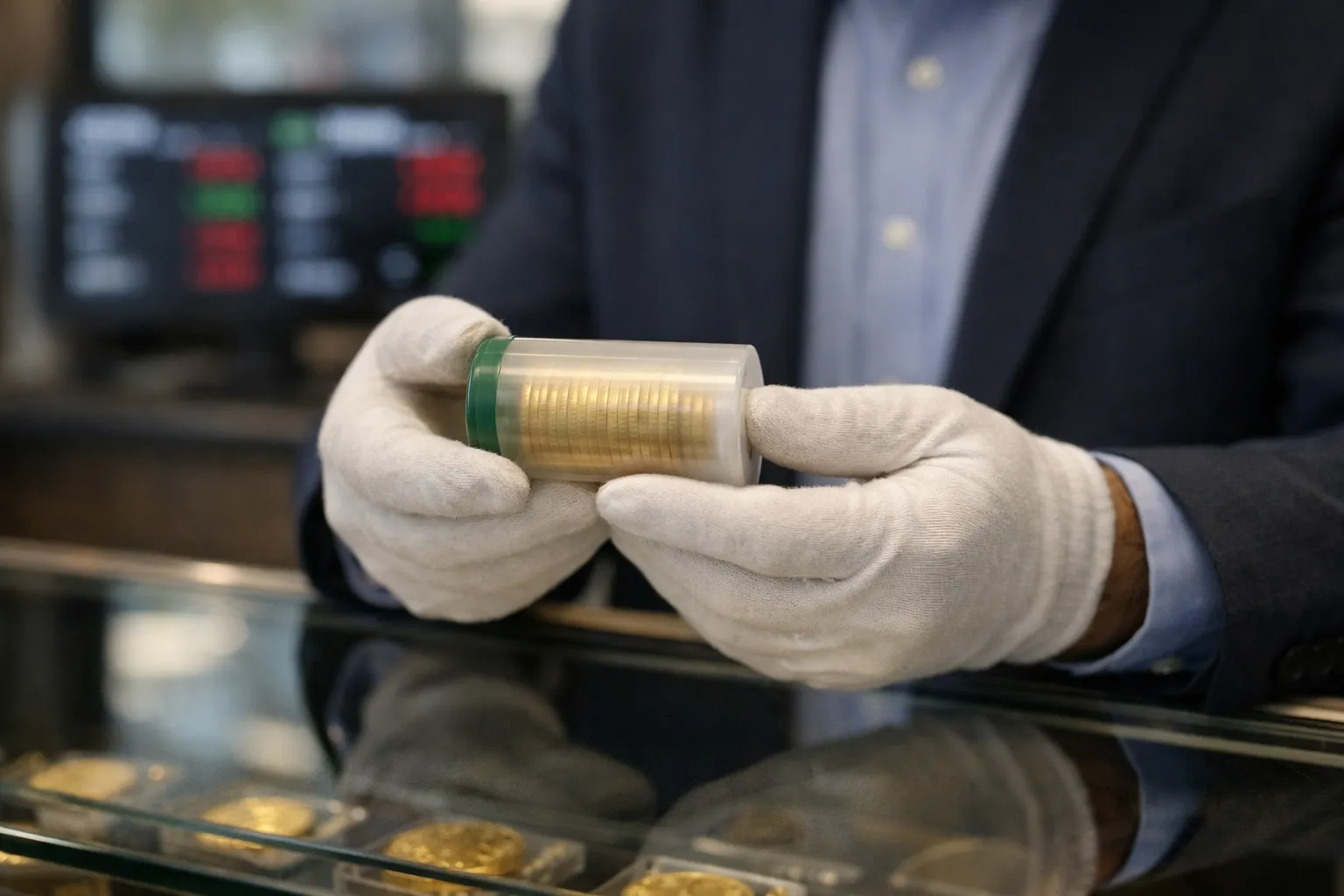
WASHINGTON, D.C., July 6, 2026 — Who: the U.S. Mint and its Authorized Purchasers (APs); What: product-specific order caps and staggered allocations on American Gold Eagle SKUs; When: allocation first announced in February and materially influencing supply through Q2 into July 2026; Where: U.S. retail bullion channels and IRA custodial procurement windows; Why: ongoing fabrication and blank-supply scheduling constraints combined with uneven dealer replenishment. Our July snapshot shows allocation pressures easing compared with March but premiums and backorders have not fully normalized.
Context: why this still matters for your wallet
The Mint sells bullion Eagles only to a handful of APs, who in turn supply retail dealers. The bottleneck is not raw gold bars sitting in vaults; it’s the pipeline that converts blanks into minted, packaged coins ready for retail sale. That pipeline — blanks, striking, engraving, packaging and shipping — has produced lumpy weekly allocations since February. Those operational limitations affect how much you pay today and how long you wait for delivery.
New July 2026 data: premiums, inventory and order-fill rates
Gold Investment News updated its daily tracking through July 1, 2026 across 12 major U.S. dealers (APMEX, JM Bullion, SD Bullion, Gainesville Coins, Kitco, Blanchard, Money Metals, Monument, Texas Precious Metals, GoldSilver, Providence, BullionVault). Key findings:
- 1 oz Eagle premiums: Average all-in retail premium for specific-year 1 oz American Gold Eagles peaked at roughly 5.6% in March (our earlier sample). In June the same sample averaged about 4.0% and our July 1 reading showed a further decline to ~3.6% all-in—still above the January baseline of ~3.0%.
- Inventory/backorders: On April 1 five of 12 dealers listed 2026-dated 1 oz Eagles as backordered or pre-sale. By July 1 that number fell to 2 of 12. Random-year 1 oz Eagles and branded 1 oz bars are more consistently available.
- Fractionals: Fractional Eagles (1/10 oz and 1/4 oz) remain the tightest market. Premiums compressed from the 8%–12% range seen in March to roughly 6%–9% in late June, reflecting small production runs and prioritized 1 oz throughput at refineries.
- Bar vs. coin gap: A 1 oz bar from major refiners typically carried a 0.9%–2.0% all-in premium in June–July versus roughly 3.6% for a 2026-dated 1 oz Eagle in our sample. The "scarcity tax" on the specific-year coin has narrowed but remains palpable at ~1.5–2.7 percentage points.
Details: what changed (and what didn’t)
The operational story is consistent: allocation reflects fabrication scheduling for specific blanks and finishes, not a shortage of raw bullion. Since May, several refiners reported accelerated blank shipments and the Mint’s APs appear to have received steadier allocations — enough to reduce backorders but not to eliminate premium dispersion. Dealers continued two common responses:
- Raising listed premiums and using payment-method surcharges (card fees of 0.5%–1.5% still common), and
- Promoting substitutes—random-year Eagles, 1 oz bars from LBMA-accredited refiners, and sovereign coins like Canadian Maple Leafs or South African Krugerrands.
The numbers tell a different story than the marketing: a 3.6% all-in premium on a 1 oz coin vs. a 1.2% all-in bar is a concrete 2.4 percentage-point cost to your position today.
Impact: who is benefiting and who is paying more
Those most affected in July:
- Buyers insisting on specific-year 1 oz Eagles—still facing higher premiums, occasional backorders and slower fills compared with random-year or bar alternatives.
- Fractional buyers—paying the highest percentage premiums; if you need small, immediate units for gifting or portfolio fragmentation, expect to pay a premium that remains multiple percentage points above bars on a per-ounce basis.
- IRA custodial purchases—custodian procurement schedules and paperwork continue to add friction. When APs prioritize standing contracts, custodial windows can lengthen fill times.
Reactions from market participants
The U.S. Mint has reiterated publicly that allocation reflects product availability and scheduling, not a statement on bullion fundamentals. Dealers in our July conversations described restock improvements but warned of episodic lags: "Allocations have loosened, but blanks are still being scheduled week-to-week," said one senior buyer at a large wholesaler who asked not to be named. Several dealers confirmed they continue to favor clients with standing contracts and to use random-year substitutions to satisfy retail orders quickly.
Payment-policy adjustments remain visible: many dealers continue to offer lower-cost ACH options or pass through reduced fees for bank transfers to reduce card-surcharge-driven price volatility. That matters: choosing payment method can change your all-in cost by 0.5%–1.0%.
Actionable guidance — what to do now (July 2026)
- Compare all-in premium per ounce. Include product premium, shipping, insurance and payment surcharges. In July, 1 oz bars still average ~1%–2% cheaper all-in than specific-year 1 oz Eagles in our sample—use that delta as your decision rule.
- Accept "any-year" if you want exposure, not a date-specific piece. Random-year Eagles have been trading ~1%–2% below 2026-dated coins during allocation periods.
- Set a firm premium cap and automate alerts. If you won’t buy at X% all-in, set a price alert with dealers or aggregator sites. July activity shows premiums can compress within days of a restock email.
- Use standing orders or subscription buys for dollar-cost averaging. Dealers with standing-contract clients have received preferential fills; if you rely on exact SKUs, a standing order reduces the probability of repeated overpaying during spikes.
- Consider substitutes strategically. For pure price exposure, certified 1 oz bars or ETFs (if you accept non-physical custody) are cost-effective. For IRA purchases, confirm custodian acceptance, fees and timelines before switching products.
What’s next: signposts to watch through Q3 2026
- Weekly dealer inventory snapshots across major retailers (watch changes in backorder counts and "pre-sale" statuses).
- U.S. Mint distributor notices and any changes to SKU coverage or order windows (track notices published to AP channels).
- Refiner blank-supply bulletins — public statements from major refiners on blank shipments or production changes.
- Premium convergence: if spot is stable or rising and dealer sell-side premiums fall, that signals allocation easing rather than a fall in demand.
FAQ
Is raw gold scarce because of the Mint’s allocation?
No. Allocation in 2026 has reflected fabrication and scheduling constraints — blank production and striking capacity — rather than a raw-gold shortage.
Should I switch to bars or ETFs now?
If your goal is price exposure, 1 oz bars have been materially cheaper on an all-in basis through June–July 2026. ETFs or pooled custody are options if you accept non-physical exposure—confirm liquidity and tax/timing implications first.
How much extra might I pay on a 1 oz Eagle right now?
In our July sample, specific-year 1 oz Eagles averaged ~3.6% all-in versus ~1.0%–2.0% for 1 oz bars—so expect a "scarcity tax" of roughly 1.5–2.7 percentage points compared with bars during recent weeks.
What’s the simplest rule to avoid overpaying?
Set and stick to an all-in premium cap (product + shipping + payment fees). If dealers exceed that cap, buy a close substitute or pause for a short period—restocks often compress spreads within days.
Can IRA custodians help me avoid allocation problems?
Custodians can streamline paperwork but are subject to the same AP allocation pipeline. If your custodian maintains standing relationships with dealers, you may get faster fills; always confirm expected timelines before initiating a purchase.