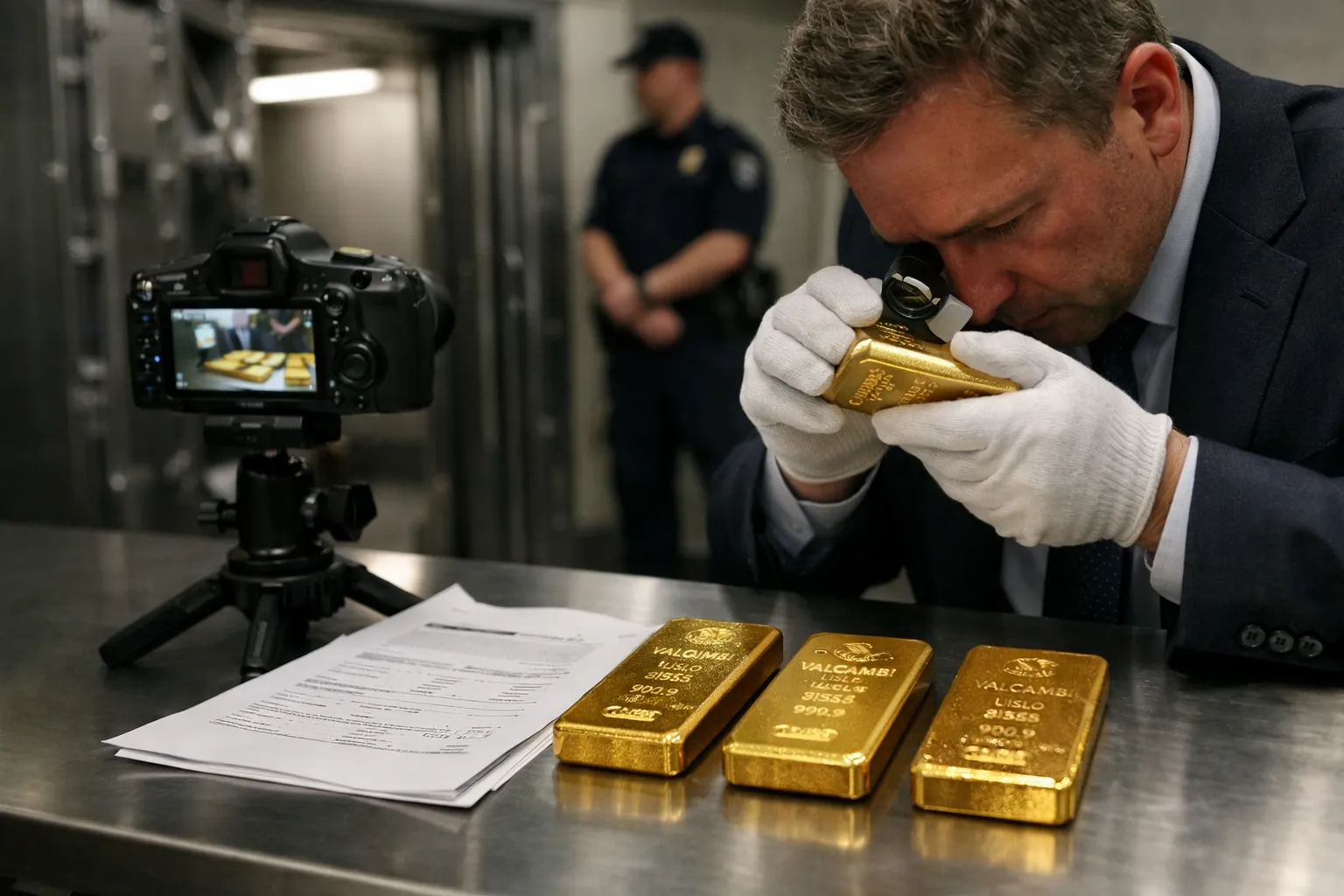
For serious gold investors, purchases above roughly 100 troy ounces (or the equivalent in kilo bars) move beyond simple retail buying into a realm where provenance, custody and insurance choices materially affect risk and liquidity. This guide walks through a practical, step-by-step process you can follow in 2026 to minimize fraud, avoid protracted disputes, secure insurance coverage and preserve the tax and liquidation pathway for high‑value bullion.
Why this matters now
Large bullion blocks attract different risks than small retail rounds: counterparty complexity, transportation exposure, assay disputes and insurance underwriting. Since 2020 the professional bullion market has seen higher scrutiny on chain-of-custody, wider insurer underwriting variation and growing demand for independent assays at delivery. A systematic approach — documented at each stage — reduces the chance of a multi‑month fight over value or provenance.
Overview: the process in 10 steps
- Pre-purchase due diligence on seller and metal
- Price confirmation and premium negotiation
- Contract terms including dispute resolution and assay protocol
- Escrow, payment mechanics and KYC/AML compliance
- Transport planning and courier selection
- Pre‑transport paperwork (serials, certificates)
- Receipt, independent assay and reconciliation
- Insurance placement and valuation methodology
- Documenting provenance and chain‑of‑custody
- Liquidity and exit planning (sale or transfer)
Step 1 — Pre‑purchase due diligence
Before any funds move, verify the seller and the metal. For professional bullion buyers this means:
- Confirm seller identity and reputation: ask for corporate registration, references from other institutional buyers, and transaction references. For brokers and dealers check trade membership (e.g., national bullion associations) and public reviews.
- Refinery and hallmark checks: prioritize LBMA Good Delivery or equivalent recognised refineries—examples include PAMP, Valcambi and Metalor. Require stamped bars with clear serial numbers and accompanying refinery assay certificates.
- Photographic proof: obtain high‑resolution images of bar faces showing serial numbers, hallmark, weight and fineness. Timestamped photos reduce later disputes.
- Confirm availability: make sure bars are segregated and not hypothecated to another party.
Step 2 — Contract and price terms
Large trades demand a written sale contract detailing price, basis (spot plus premium), currency, and the exact delivery/receipt mechanism. Key contractual items to include:
- Exact identification of bars (serial numbers, bar type, fineness, weight).
- Price formula and a settlement window (e.g., based on London AM fix + X USD/oz at a specified timestamp).
- Assay and acceptance protocol—who pays for independent assay, acceptable variance thresholds, and time window for rejection.
- Clear dispute resolution clause—specify arbitration forum and governing law to avoid jurisdictional conflicts.
Step 3 — Escrow, KYC and payment mechanics
Use an independent escrow agent for payment until physical receipt and acceptance, or a staged payment schedule (deposit + balance on acceptance). Ensure both parties complete KYC/AML checks required by your jurisdiction and the seller’s. Payment methods commonly used for high-value bullion are bank transfer (SWIFT) and escrow platforms that specialise in commodities.
Step 4 — Transport and courier selection
Transport is one of the highest‑risk phases. For high-value shipments prefer established precious‑metal logistics firms: Brinks, Malca‑Amit, Loomis and other insurers‑backed specialists. When choosing a courier:
- Verify carrier insurance limits and whether insurance covers the declared value, including premiums and tax elements.
- Confirm secured transport options (armoured vehicles, armed couriers, escorted flights where necessary).
- Use tamper‑evident packaging and document chain‑of‑custody milestones (pickup, in‑transit handoffs, arrival times).
Step 5 — Pre‑transport documentation
Prepare the following documents to travel with the shipment (or be exchanged securely ahead of time):
- Refinery assay certificates and invoices.
- Photographs and serial‑number lists for each bar.
- Proof of ownership and seller declarations (signed).
- Customs/export paperwork where cross‑border movement is involved — confirm with customs brokers in all jurisdictions.
Step 6 — Receipt and independent assay
On receipt, conduct an independent verification before accepting the shipment from the courier. Best practice:
- Open and inspect packaging in a secure environment with documented video and witness(s).
- Match serial numbers and visual hallmarks against pre-shipment photos and labels.
- If any discrepancy exists, invoke the contract's rejection/assay clause and immediately notify insurer/escrow.
- Arrange an independent assay at an accredited lab (e.g., SGS, Bureau Veritas or a recognised national assay office) for items where stamp/hallmark clarity is in doubt or where buyer requires physical assay. Agree beforehand who pays assay costs in the contract.
Accept only when the independent assay (if invoked) confirms weight/fineness within agreed tolerances.
Step 7 — Insurance: placement and wording
Insurer appetite and policy terms vary for large shipments and stored bullion. Key insurance considerations:
- Cover type: aim for "all risks" physical loss and damage cover while in transit and at rest. Check exclusions carefully.
- Policy limit: insure to replacement value, including premiums and tax components where appropriate.
- Named perils vs. all‑risk: prefer all‑risk wording; ensure coverage for theft, disappearance and handling damage.
- Valuation basis: specify how loss will be valued (spot price at time of loss vs. average of two market fixes) and confirm deductible levels.
- Claims process: document required evidence (photographs, assay reports, police reports) and timelines for notification.
Obtain insurer confirmation in writing that coverage applies from pickup to acceptance or to the named vault, depending on your risk allocation in the contract.
Step 8 — Documenting provenance and chain‑of‑custody
For high-value bullion, provenance is often as important as physical verification—especially if you later seek financing, consignment sales or resale to institutional buyers. Maintain a single file (digital + physical) containing:
- Purchase contract, invoices and proof of payment.
- Seller declarations and any pledge/claim disclaimers.
- Serial‑number inventory and photos before and after transport.
- Courier manifests and signed handoff records.
- Independent assay certificates and correspondence with labs.
- Insurance policy documents and claims contact information.
Use tamper‑evident digital records (timestamped, stored in a trusted archive) to preserve provenance over time.
Step 9 — Tax, customs and regulatory compliance
Taxation and reporting vary widely by jurisdiction. Practical steps:
- Engage a local tax or customs adviser before purchase if you plan cross‑border movement. VAT, import duties and reporting rules differ by country and by product type (investment bars vs. numismatic coins).
- Record acquisition costs precisely—invoice, commissions, transport and insured freight form the tax cost basis for future capital gains calculations.
- Follow AML/compliance obligations: keep KYC records and be prepared for questionnaires from insurers, custodians or prospective buyers.
Step 10 — Liquidity and exit planning
Think about how you will sell or finance the holding. To preserve liquidity:
- Keep bars from recognised refiners and maintain unbroken documentation: institutional buyers and lenders prefer LBMA Good Delivery stamps and clear assay history.
- Consider establishing a relationship with a reputable dealer or precious‑metal bank for future repurchase or consignment sales; pre‑negotiated terms speed liquidation.
- For short‑term needs, discuss repo and borrowing options with bullion banks—but understand margining and haircuts.
Common pitfalls and how to avoid them
- Relying solely on seller photos: insist on independent verification on arrival or pre-delivery inspection by a neutral party.
- Using uninsured couriers or insufficiently insured policies: verify insurer capacity and sublimits for precious metals.
- Vague contract clauses about acceptance and assay: define thresholds and time windows in writing to avoid disputes.
- Poor record keeping: loss of invoices, serial-number lists or assay certificates can materially reduce resale value.
Practical checklist — what to have before you sign
- Signed sale contract with serial numbers and assay clause
- Seller corporate and KYC documents
- Photographs of bars and assay certificates
- Designated escrow agent and payment instructions
- Confirmed carrier with insurance certificate and declared‑value confirmation
- Accredited independent assay provider identified (if to be used)
- Destination vault or custody provider and contact details
- Tax/advisory contact and plan for customs/declaring
Sample dispute scenario and how the protocol helps
Imagine: you receive a shipment and the serial numbers match, but a visual inspection suggests an altered hallmark. Because your contract required an independent assay within 48 hours and specified SGS as the arbitrator, you (a) immediately notify the seller and insurer, (b) deposit funds in escrow pending assay results, and (c) ship the bars to the pre‑agreed lab. The assay confirms a shortfall in fineness; the contract’s remediation clause obliges the seller to replace or refund. Without written assay protocol and escrow, resolution could become protracted and costly.
Final notes
High‑value bullion transactions require discipline: trust but verify, document every handoff, and align contractual, insurance and logistical terms before any transfer. Use recognised refiners and carriers, arrange independent assay rights, and keep thorough provenance files. These steps will not eliminate risk, but they convert many of the major, deal‑ending uncertainties into manageable, insurable events.
If you plan a specific transaction, the single most effective step is to assemble a short, written transaction plan that lists parties, documents and timelines and to share it with your insurer and legal counsel before funds or bullion move.