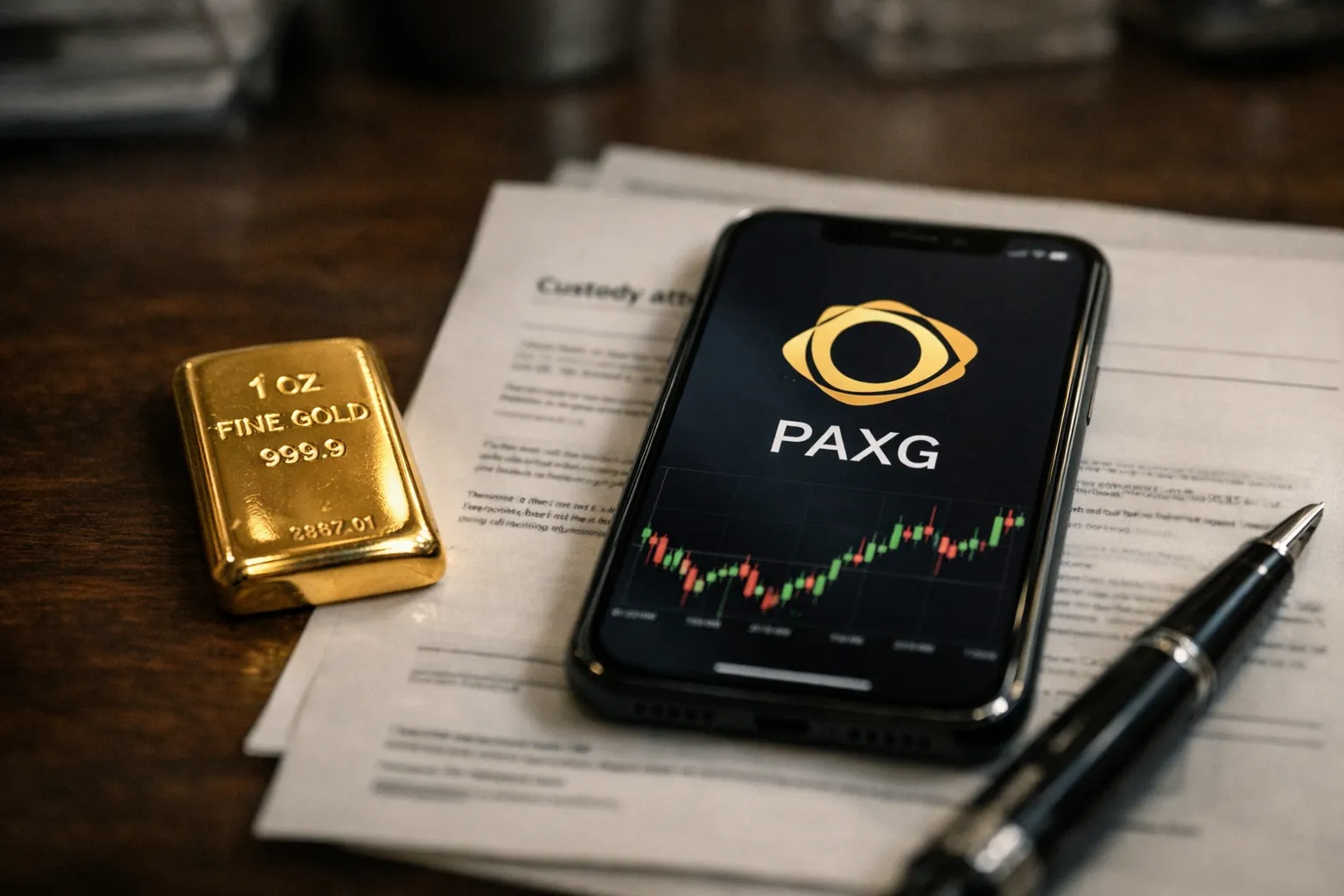
Tokenized gold remains one of the most practical intersections between traditional bullion and blockchain. Paxos Gold (PAXG) is among the longest‑running tokenized‑gold products. This review evaluates PAXG as of August 2026: how it stores and attests to allocated gold, trading and redemption mechanics, costs and risks, and which type of gold investor — if any — should consider it.
What PAXG actually is
PAXG is an ERC‑20 token that represents ownership of allocated, LBMA‑grade gold. Each token corresponds to a quantity of fine troy ounces stored in secure, insured vaults under custodial arrangements. The token trades on centralized and decentralized exchanges and can be held in standard Ethereum-compatible wallets.
Core features evaluated
- Allocated backing and custody: PAXG’s value proposition rests on allocated bullion — not an unallocated claim. Holdings are stored with accredited custodians and are subject to independent attestations.
- On‑chain ownership and divisibility: Tokens are programmable and divisible, making small fractional allocations practical for portfolio construction and trading.
- Liquidity and market access: PAXG trades on multiple crypto exchanges and over‑the‑counter desks, offering 24/7 secondary liquidity (subject to exchange hours and withdrawal limits).
- Redemption for physical gold: Token holders can, under Paxos’ terms, redeem tokens for physical gold or allocated bar certificates — subject to minimums, fees, custody paperwork and delivery logistics.
- Attestation and transparency: Paxos publishes regular third‑party attestations of bar inventories and allocated holdings; frequency and scope should be checked on Paxos’ website for the latest reports.
Fees and real costs
PAXG holders do not generally pay a continuous storage fee through the token itself. Costs to consider:
- Exchange spreads and trading fees when buying or selling on an exchange.
- On‑chain transaction (gas) fees to move tokens between wallets or to a custodian address.
- Redemption fees, minimums and shipping/insurance if converting tokens back to physical bullion — these are material and can make small redemptions uneconomic.
- Indirect costs for custody if using a third‑party hosted wallet or custodial service that charges fees.
Practically, a buy‑and‑hold investor paying attention to spreads and choosing a low‑fee execution avenue can hold PAXG with modest ongoing cost — but physical delivery remains a comparatively expensive option.
Security, auditability and counterparty risk
PAXG reduces certain traditional frictions: ownership is recorded on‑chain, and independent attestations provide a reconciliation between tokens issued and physical bars held. However, tokenized gold introduces layered counterparty risks:
- Custodian risk: The bars are held with custodians; if a custodian fails or mismanages inventory, token holders rely on contractual and legal remedies rather than immediate possession.
- Issuer and operational risk: Paxos, as issuer and administrator, is a central party. Operational failures, insolvency, or regulatory action affecting Paxos could impair redemptions or service.
- Exchange and smart‑contract risk: Trading venues can suspend withdrawals; tokens on smart‑contract platforms can theoretically be exposed to bugs or exploits (though PAXG benefits from standard ERC‑20 implementations).
Pros — where PAXG shines
- Programmability and divisibility make PAXG ideal for small, diversified positions and algorithmic strategies.
- Immediate secondary‑market liquidity (trading hours dependent on venue) without needing to arrange vault access or physical logistics.
- Allocated backing and published attestations give a higher fidelity link to physical gold than many synthetic products.
- Integrates easily with crypto‑native infrastructure — wallets, DeFi rails and custodial brokerage platforms.
Cons — the tradeoffs
- Counterparty exposure to the issuer and custodians; not the same as direct possession of bars or coins.
- Physical redemption is often subject to minimum weights, paperwork and meaningful fees — limiting usefulness for investors who want regular physical take‑delivery.
- Taxation is jurisdiction‑dependent. Holding a token does not remove collectible or commodity tax treatments in many countries; consult a tax advisor.
- Regulatory uncertainty remains in some jurisdictions for tokenized financial products — this can affect exchange availability and on‑ramps/off‑ramps.
Practical comparison: PAXG vs allocated vault account vs gold ETF
- Compared with a direct allocated vault account: Vault accounts give direct contractual custody and often easier physical redemption channels, but they lack PAXG’s on‑chain liquidity and divisibility.
- Compared with a physically backed ETF or trust: ETFs (or Canadian/US trusts) offer familiar brokerage access and regulatory wrappers; they are typically subject to exchange trading hours and custody models that differ. PAXG is more flexible for crypto‑native portfolios and fractional exposure.
Who should consider PAXG?
- Crypto‑literate gold investors who want allocated physical exposure combined with 24/7 on‑chain trading and fractional positions.
- Investors building multi‑asset crypto portfolios seeking to hedge with an allocated precious‑metal instrument without establishing a vault relationship.
- Short‑term traders who benefit from near‑continuous liquidity and quick settlement between wallets and exchanges.
Who should be cautious: investors who require guaranteed, immediate physical access to bars, those unwilling to accept issuer/custodian counterparty risk, or investors in jurisdictions where tokenized commodities face uncertain tax or regulatory treatment.
Checklist before you buy
- Confirm the most recent attestation reports and the custodians named by Paxos.
- Understand the minimums, fees and lead times for physical redemption in your jurisdiction.
- Factor in exchange spreads, trading fees and on‑chain gas costs when calculating total cost of ownership.
- Check whether your preferred trading venue supports withdrawals of PAXG to an external wallet.
- Get tax advice on how tokenized gold is treated where you reside.
Bottom line
PAXG occupies a useful niche: it pairs allocated physical backing with blockchain convenience. For crypto‑native investors and traders who value divisibility and liquidity, it’s a pragmatic way to hold allocated gold without the operational overhead of vault accounts. For traditional investors prioritizing direct custody, immediate physical redemption or minimal counterparty exposure, conventional allocated vaults or physical bullion remain preferable. PAXG is neither a replacement for physical possession nor a risk‑free shortcut — it’s a tool with clear strengths and practical limits. As always, match the instrument to your custody preferences, tax situation and investment horizon.